

NHS eye bank's longest serving staff member encourages more people to consider cornea donation as eye bank celebrates 40 years of sight saving work
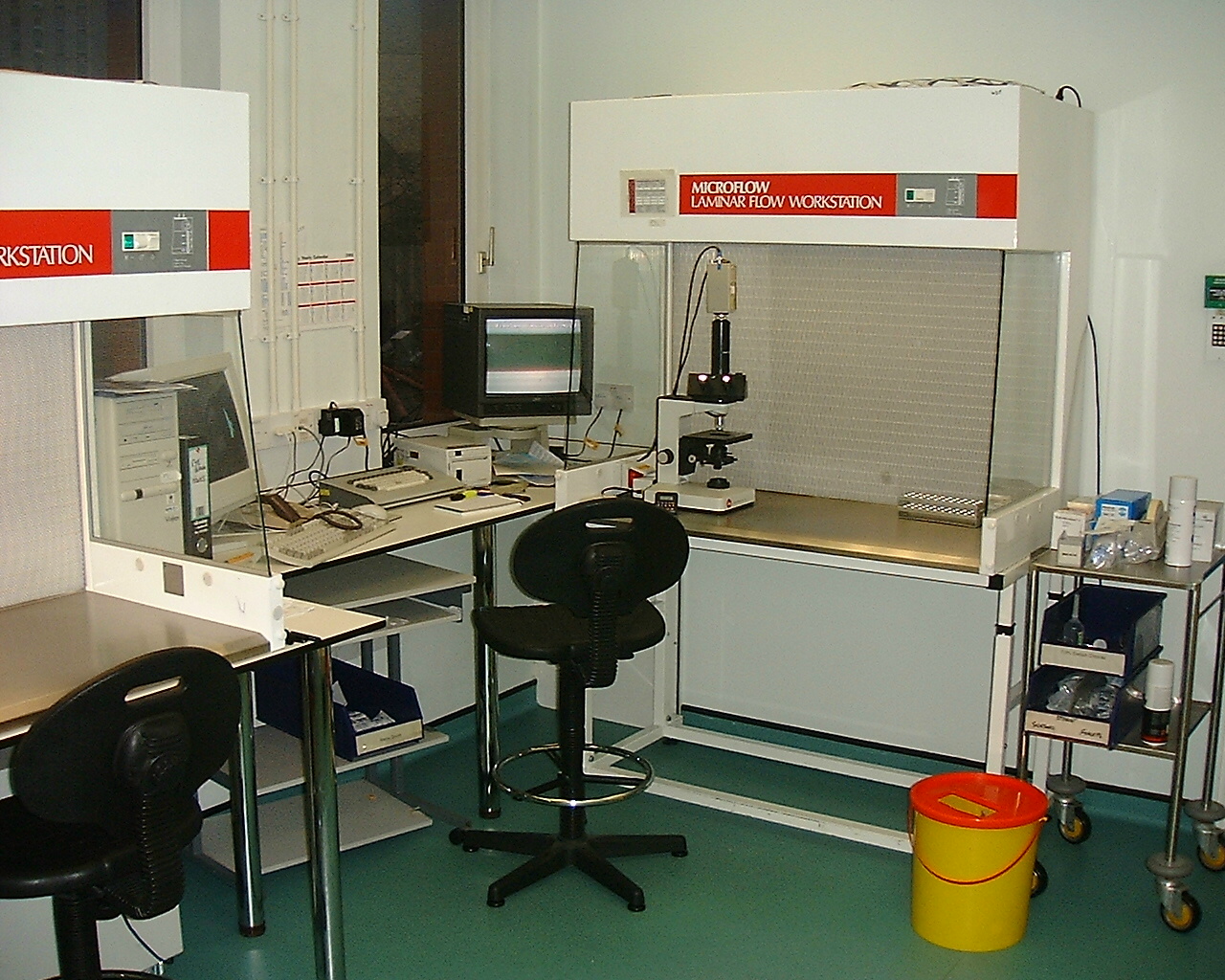 The NHS is this month celebrating 40 years of what went on to become the NHS Blood and Transplant (NHSBT) eye bank, with a special appeal from the bank’s longest serving staff member, who is encouraging more people to consider cornea donation as he awaits a fourth cornea transplant himself.
The NHSBT eye bank, formerly the Bristol Eye Bank and set up by the University of Bristol, first issued corneas for transplantation in 1986 and Toni Woodward, 56, from Weston-Super-Mare, joined nine years later. He is today the longest-serving eye bank staff member and in his time there, has himself received 3 cornea transplants – the first in 2012 - and is on the list for a fourth. All of the corneas he has received came from the very eye bank he works in. Toni, a dad of 2 and grandfather of 1, was born with congenital glaucoma, a condition where there is high pressure inside the eye. He underwent various surgeries as a child but never expected he would need a cornea transplant.
Toni's story
Toni says: "Becoming a recipient myself makes me see the work that I do differently. I've always been in awe of the families who make that decision to donate their loved one's corneas but I also now have that personal experience and true understanding of the benefits that a cornea transplant can bring.
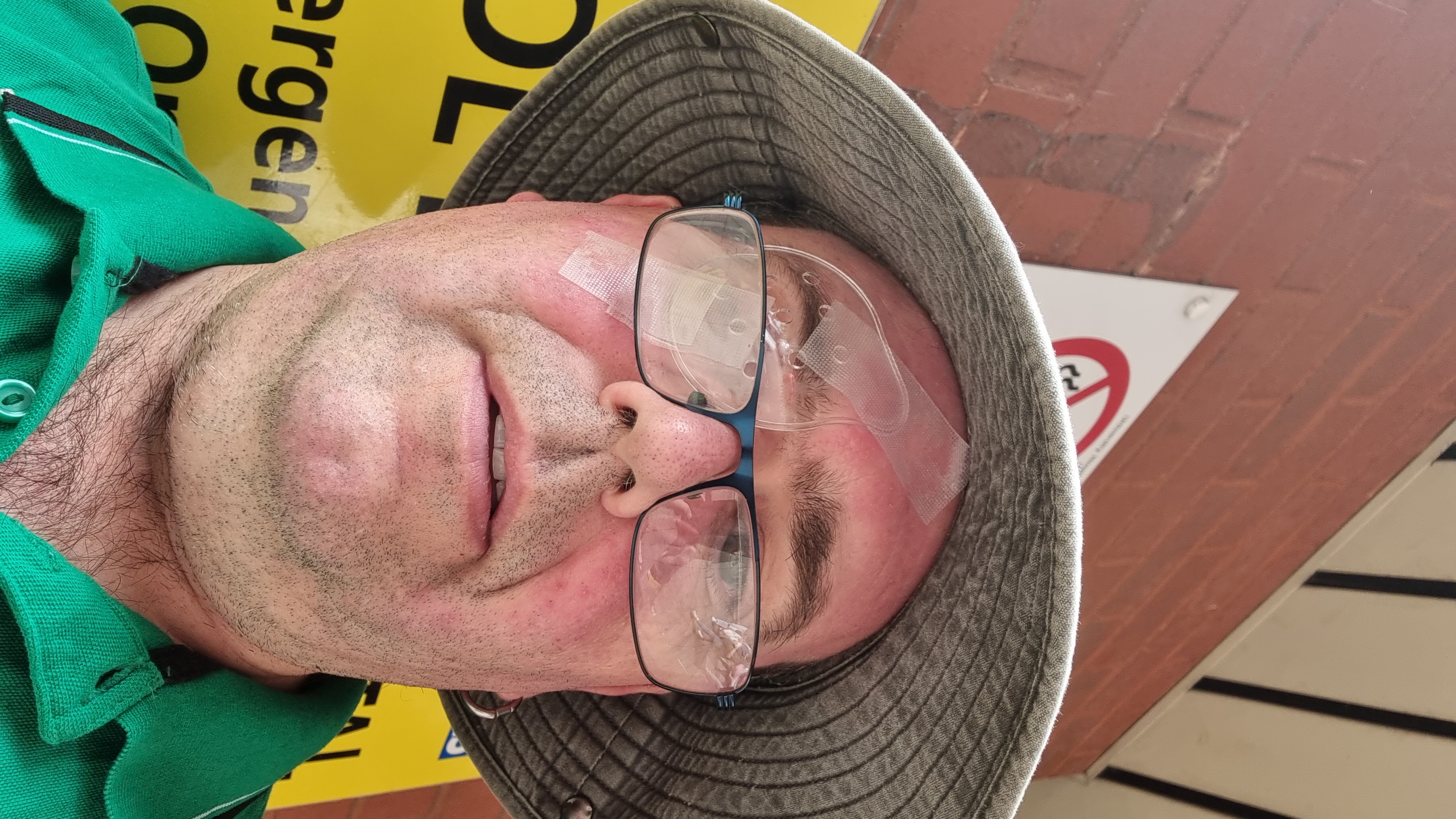 "I've been lucky to have received 3 corneas – and hopefully a fourth – and incredibly, all of the corneas I received, came through our eye bank, my workplace. I don't think many people could say that! We get a list of what is needed and for whom and when I saw my name on there, it was both surreal and amazing."
What later became the NHSBT eye bank was set up in 1986 by the University of Bristol's Department of Ophthalmology, in collaboration with the UK Transplant Service.
Eye banks had previously been set up at the Queen Victoria Hospital, East Grinstead and Moorfields Eye Hospital, London, but their ability to distribute corneas to other hospitals was limited because of the short timeframe corneas could be stored for and a lack of transport infrastructure. Surgeons outside of these areas had to rely on the uncertain availability of local eye donors, which ruled out elective surgery.
The Bristol eye bank team quickly introduced a new method of storing corneas at 34 degrees Celsius, the cornea's normal temperature, which increased the time they could be stored for from 4 days to 4 weeks. Around the same time, the UK Transplant Service established the Corneal Transplant Service (CTS) to transport corneas between hospitals, as already happened with organs. The combination of the extended storage time and the introduction of the national distribution service, transformed the logistics of corneal transplantation for many surgeons throughout the country, meaning it could become an elective procedure, planned well in advance.
In 1989, the Manchester eye bank, which had been set up a year earlier, joined the CTS. Both CTS eye banks were formally brought under NHS Blood and Transplant in 2015, with eye banks now located in NHSBT centres in Filton, Bristol and Speke, Liverpool.
Toni says:
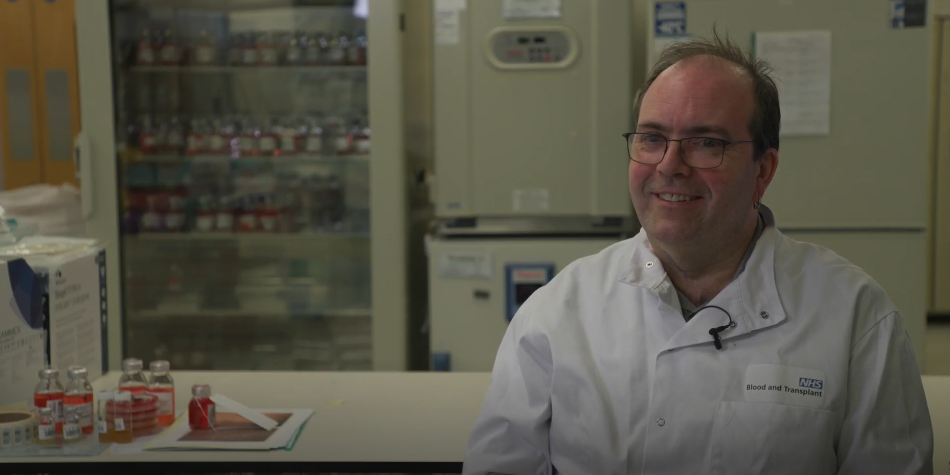 "It's incredible to see how far corneal transplantation has come over the 40 years since what is now the NHSBT eye bank was set up. The incredible work done by the people before me – and the work we have done since – has led to people like me being able to receive the transplants that we need, when we need them. But of course, we couldn't do it without the generosity of the families of our donors, who make that decision at such a difficult time in their lives.
"I cannot thank the families of my donors enough. It's because of them that I have been able to watch my granddaughter grow up, I can carry on with the activities that I enjoy and importantly, do the work that I do, to make sure that others also receive that precious gift of sight.
"Please, consider cornea donation and register your decision to donate on the Organ Donor Register. It means everything to people like me."
Emeritus Professor John Armitage was one of the team who set up the eye bank at the University of Bristol in 1986 and implemented the changes that so greatly improved the availability of corneas, not just for elective surgery but for clinically urgent, emergency transplants. He was awarded an OBE for services to corneal transplantation in 2019. He was Director of Bristol Eye Bank and worked alongside Toni for 20 years.
Professor Armitage says:
"To have been involved from the start with the setting up of Bristol Eye Bank, helping to create a service that has benefited so many patients needing corneal transplants over the last 4 decades, has indeed been a privilege.
"That first year, we sent out 59 corneas and then very quickly, we were issuing over 1,000 a year from Bristol. By 1990, the eye banks in Bristol and Manchester were issuing about 2,000 corneas every year. It showed a real unmet need. We managed to help so many people, so quickly and continue to do so today.
"Having worked along Toni for a long time, I can truly appreciate the difference that the cornea transplants made to his life – and how much transplantation can improve the lives of others who receive a cornea. It's been an honour to have been a part of bringing that to people across the country. Crucially, none of this would be possible without the generosity of the families of donors, thinking of others at such a difficult time and making the decision to donate their loved one's corneas. I encourage everybody to consider cornea donation and to register their decision on the Organ Donor Register."
After many years of collaborative working, NHS Blood and Transplant officially took over management of the eye banks in 2015. Now, more than 4,000 corneas are issued for transplant every year. Since the eye banks were first set up in 1986, over 110,000 corneas have been sent to hospitals around the country.
Statement
How you can help
To find out more, and to register an organ and tissue donation decision, visit our website, call 0300 123 23 23 or use the NHS app.