

Who can become a living kidney donor?
This page provides some general guidance on who can become a living kidney donor and covers frequently asked questions on specific health conditions.
If you are interested in becoming a living kidney donor, it is important to discuss any health conditions with your living donor coordinator as each person is assessed individually. You are also entitled to a second opinion from another transplant centre and you can ask to be referred for this if you wish.
Is there an age limit for becoming a living kidney donor?
Anyone over the age of 18 (over 16 in Scotland) can be considered as a living kidney donor. There is no upper age limit as everyone is individually assessed.
If you volunteer to donate a kidney as a living donor, you will undergo a thorough assessment to ensure that the short and long term risks for you are as low as possible.
Can you donate a kidney if you have high blood pressure?
If you have high blood pressure (also known as hypertension), you may still be able to donate a kidney as a living donor. However, you will be required to have extra tests to make sure that high blood pressure has not affected your kidneys in any way. If there is evidence of any damage, you will be advised not to proceed.
If you are eligible to donate, you may be asked to take medication before and after donating a kidney to keep your blood pressure at an acceptable level. After donating, it will also be important to have your blood pressure monitored regularly (at least once a year), so treatment can be started early if your care team find you are developing high blood pressure.
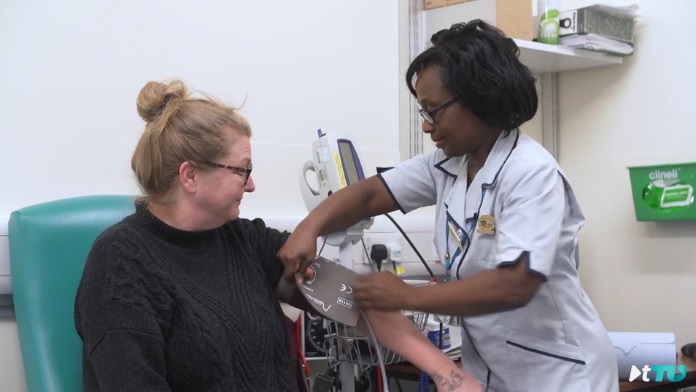
If you are at risk of diabetes or already have the condition you may not be able to donate a kidney. Your living donor team will be able to advise whether donation is likely to be possible in your individual situation.
If you are at risk of developing diabetes (due to family history, diabetes in pregnancy, obesity or your ethnicity) you will require further tests to assess the risk of you developing the condition or any complications related to it.
Can you donate a kidney if you are overweight?
If you are overweight, you will be required to undertake more tests and may not be able to donate unless you lose weight prior to donation. This is because being overweight carries an increased risk of complications which may affect your remaining kidney in the long term.
Your local living donor team may be able to help you find a suitable weight loss programme if this is something you would like help with.
Can you donate a kidney if you have cancer?
Some types of cancer may prevent you from being a kidney donor, but it's important to discuss your individual situation with your living donor team so that they can advise what may be possible for you.
Could alcohol or drug use prevent kidney donation?
If you currently drink a lot of alcohol or use recreational drugs, this may prevent donation going ahead. However, this will always be assessed on an individual basis and your living donor team can discuss lifestyle change options with you.








Become a living kidney donor

Help promote living donation
Order or download a range of materials, including faith-specific leaflets.
Can’t find what you’re looking for?
For general enquiries
Email: enquiries@nhsbt.nhs.uk
Or call: 0300 123 23 23